SHIITAKE
We began researching Shiitake over 4 years ago. During that time, the world has become obsessed with both Japan and mushrooms. A post-covid Japanese tourism rush combined with favorable exchange rates to fuel a renewed interest in regional food, crafts, and culture.
At a the same time, mushrooms have been experiencing a zeitgeist moment in the West. From documentary works like Fantastic Fungi and Truffle Hunters, to books like Michael Pollan’s How to Change your Mind and Merlin’ Sheldrake’s Entangled Life - they’ve seeped into every corner of popular culture. Mushroom lamps, mushroom patterned clothing, mushroom coffee. Mushroom-focused dishes feature prominently at both Shake Shack and in Michelin-starred restaurants. The word “umami” has become ubiquitous in American dining culture, and is synonymous with shiitake.
There’s never been a better time to tell the story of these mushrooms and the people who grow them.
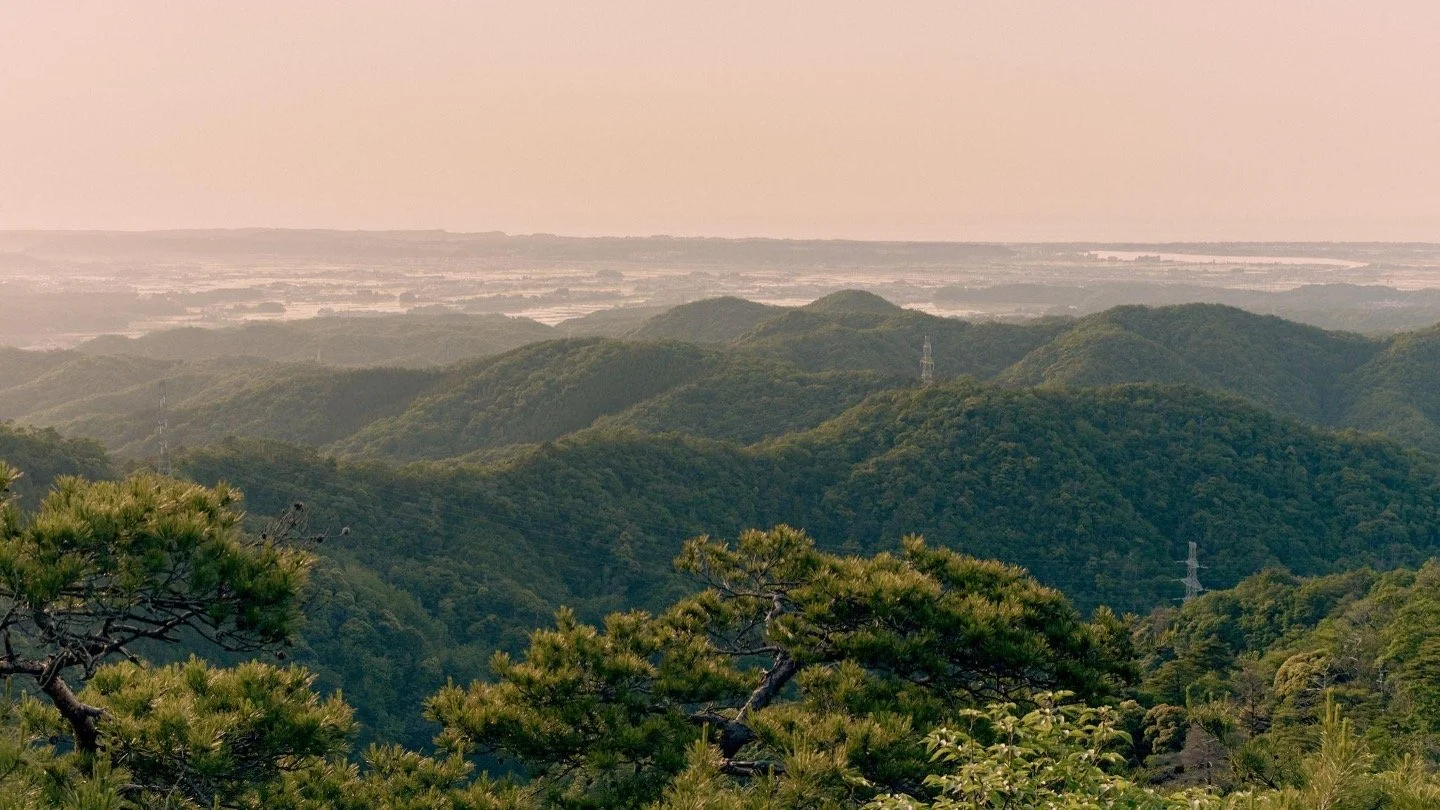
Deep in Japan’s cloud-covered mountains, shiitake farmers patiently cultivate some of the world’s most coveted, umami-rich mushrooms using techniques honed over two millennia.
But they grow more than mushrooms. In a world shaped by extraction, they’ve managed to preserve something far rarer: ecologically regenerative relationships with their land that manage to persist in the face of modern pressures.
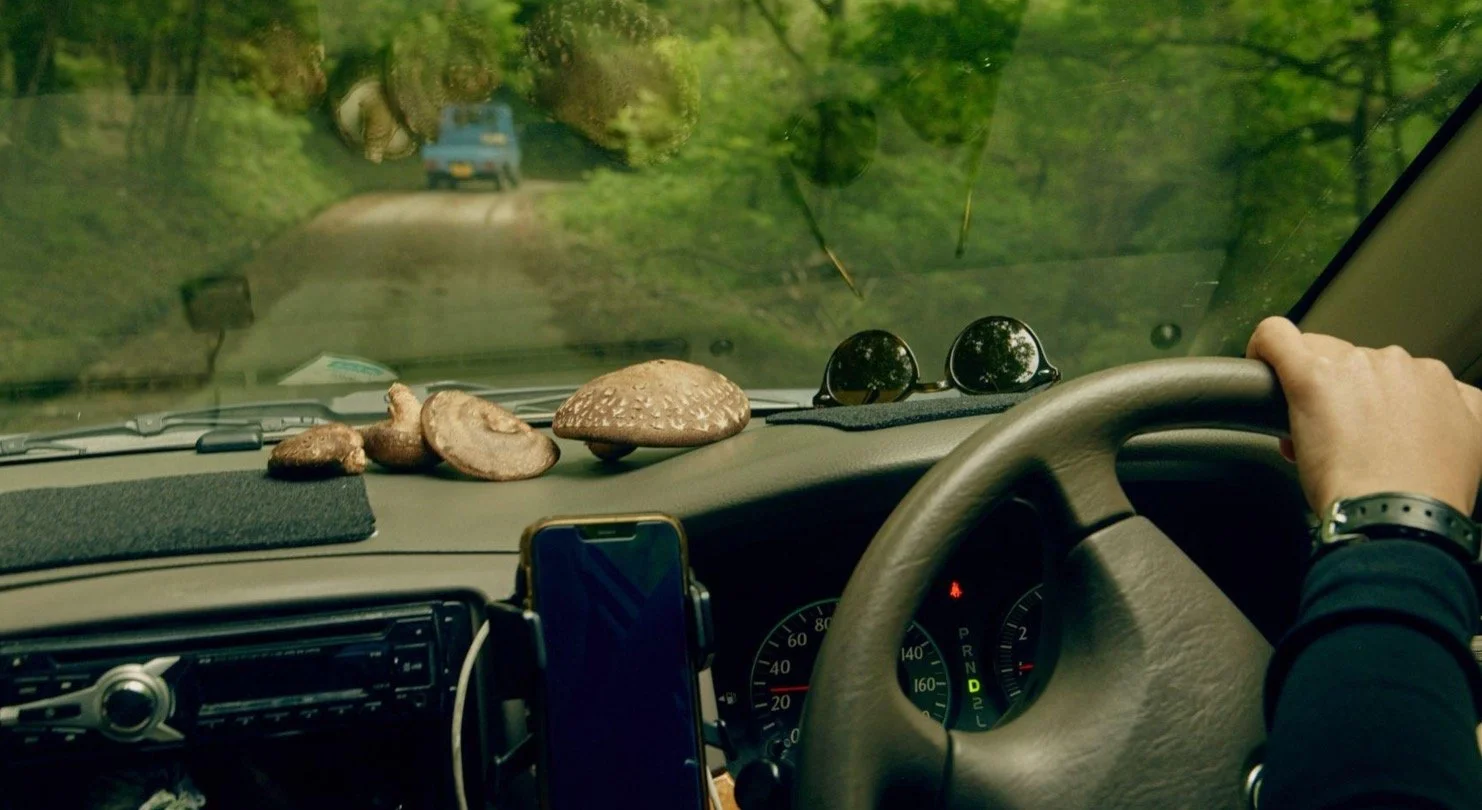
Shiitake documents these aging forester-farmers in a feature length film as they struggle to preserve their way of life. Using mushrooms as a cultural lens, we observe them and their communities as they cultivate woodland shiitake varietals that have shaped Japanese cuisine and culture for centuries.
participants
The Archivist
During her final year of college abroad, Mayu was diagnosed with acute lymphoblastic leukemia, a fast-moving cancer that nearly killed her. After watching her hospital roommates die around her, she suffered from survivors guilt and questioned her life’s purpose. After years of rehabilitation, she moved to the mountain town of Yamanashi seeking healing, where she began working at one of Japan’s last log-grown shiitake spawn (seed) producers. She immersed herself in the lives of the aging farmers and found purpose in the mountain living traditions. She is on a mission to document, preserve and share the knowledge of these traditions before it is lost.
The Chairwoman
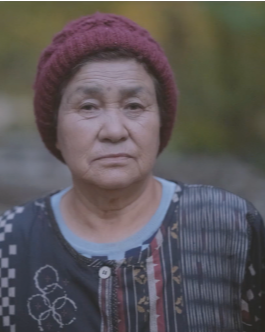
At 85, Kaisho of Amerikaya runs a generational logging company in Fukushima alongside her grandson. Having survived famine and war by selling rice on the black market, she went on to build one of Japan’s most successful logging companies with her husband. She meets Mayu, eager to learn the traditions of the living in mountains, and graciously shares her wealth of knowledge. She tells stories of how the forest, field, and ocean have sustained her family through Japan’s hardest decades.
The Mayor

Born and raised in Urugi, a remote village in Nagano prefecture, The Mayor is fighting to keep his village alive after it was gutted by the post-industrial population flight to Tokyo. He is working to bring eco-tourists, weekenders and eventually full-time residents back to the village by exposing them to the gifts his mountain has to offer. He spends his time teaching others to grow shiitake, forage, and hunt local game. He is passing his knowledge down to his grandson, Kotaro, who he hopes will carry on the traditions and responsibility of preserving the town.
The Businessman
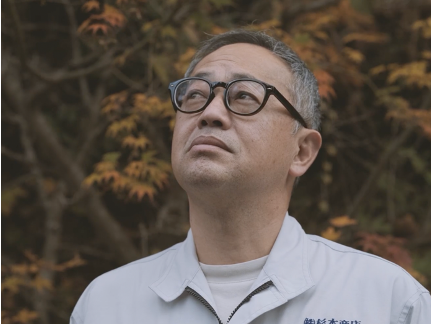
Kazuhide Sugimoto (Kaz) is heir to a shiitake dehydration and packaging company that was started in the ancient mountains where the first shiitake in Japan were cultivated. His region is renowned for producing the best donko shiitake – coveted mushrooms whose flavor can be specific to each mountain environment, similar to the way local terroirs affect wine grapes. His life’s mission is to share the rich flavor and unique story behind these mushrooms, which boast up to 30 times the umami of lower-quality Chinese shiitake.
The Logger
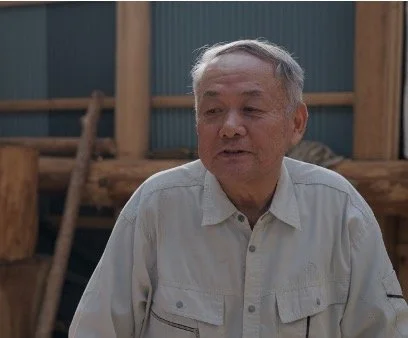
Born in Takachiho, Hirosue inherited his mountain forest after his father and brothers passed away at a young age. He has been managing it for 60 years, the last 15, by himself. He has felt the effects of climate change firsthand and continues to do the physically demanding work involved with managing the forests. As he logs trees that his father and grandfather planted, he knows how cedar planted on one face of the mountain will grow differently than another, how the roadways affect the soil and how the mountain health effects the entire region.
The Farmer
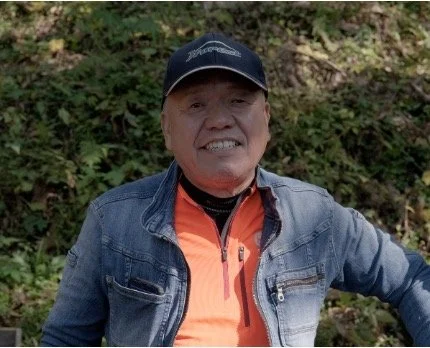
Fusao is one of the few men returning to their ancestral mountain homes to care for the forest and embrace the Satoyama (“mountain living”) lifestyle. He now manages over 250 hectares of forest, integrating shiitake cultivation into his work. After giving up his busy life in the city, he finds peace and sustainability in returning to a life in the mountains. His hope is that his children will one day return to the land as well.
setting
The Sea of Clouds
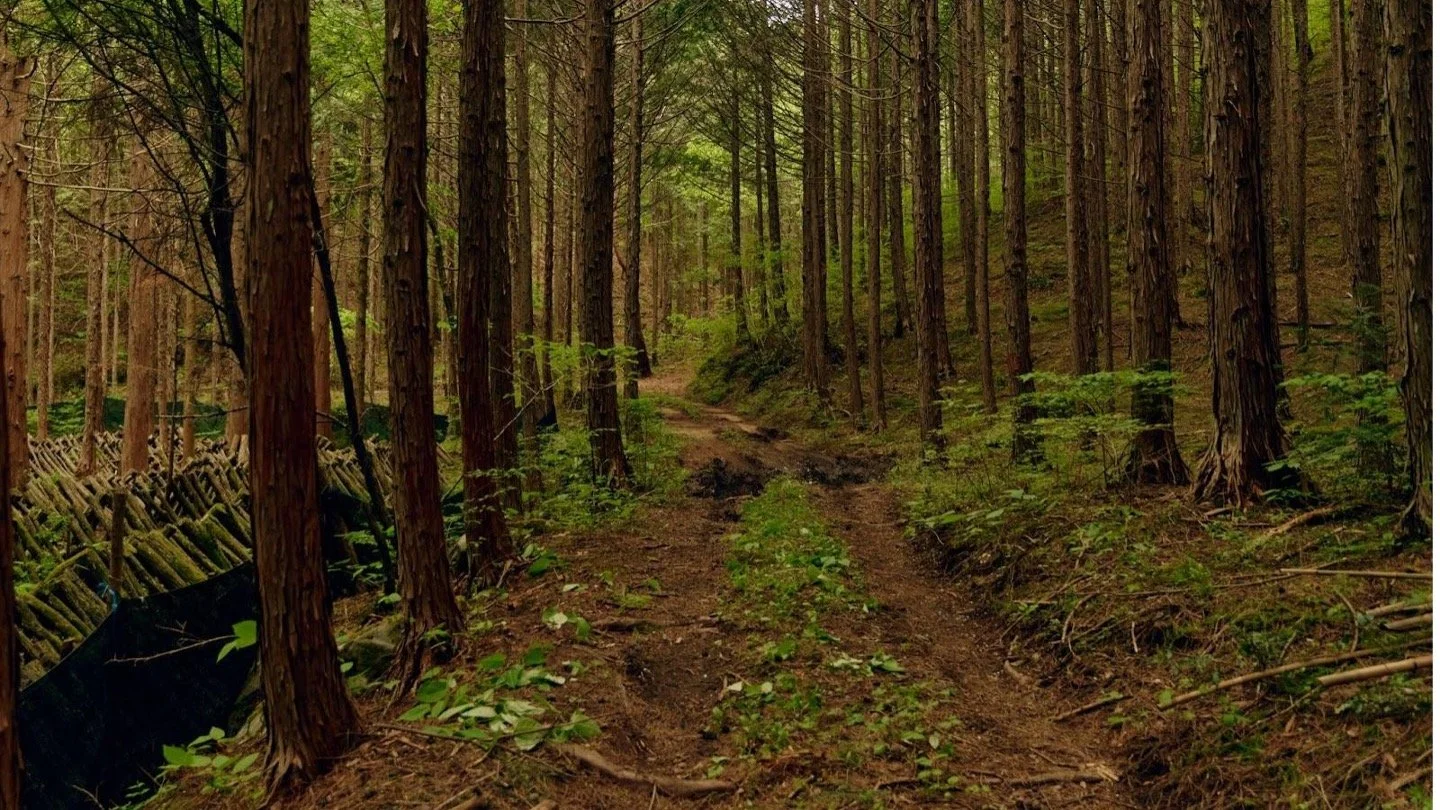
Each evening, these mountain forests–regeneratively managed for over a thousand years–turn into a giant organic sponge. They catch the clouds that drift in from the Pacific, drawing ocean water down into the mountains’ soil, dense underbrush, and rushing streams. It creates the perfect conditions for growing shiitake in the forest.
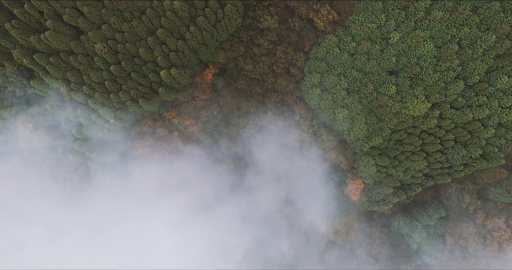
A single drop of dew can take over a year to travel from the canopy into the groundwater. Over time, it becomes enriched by the nutrient-dense forest soil and trickles back to the nearby coast to feed the plankton and fish. Eventually, it will evaporate and return to the sky, beginning the cycle again.
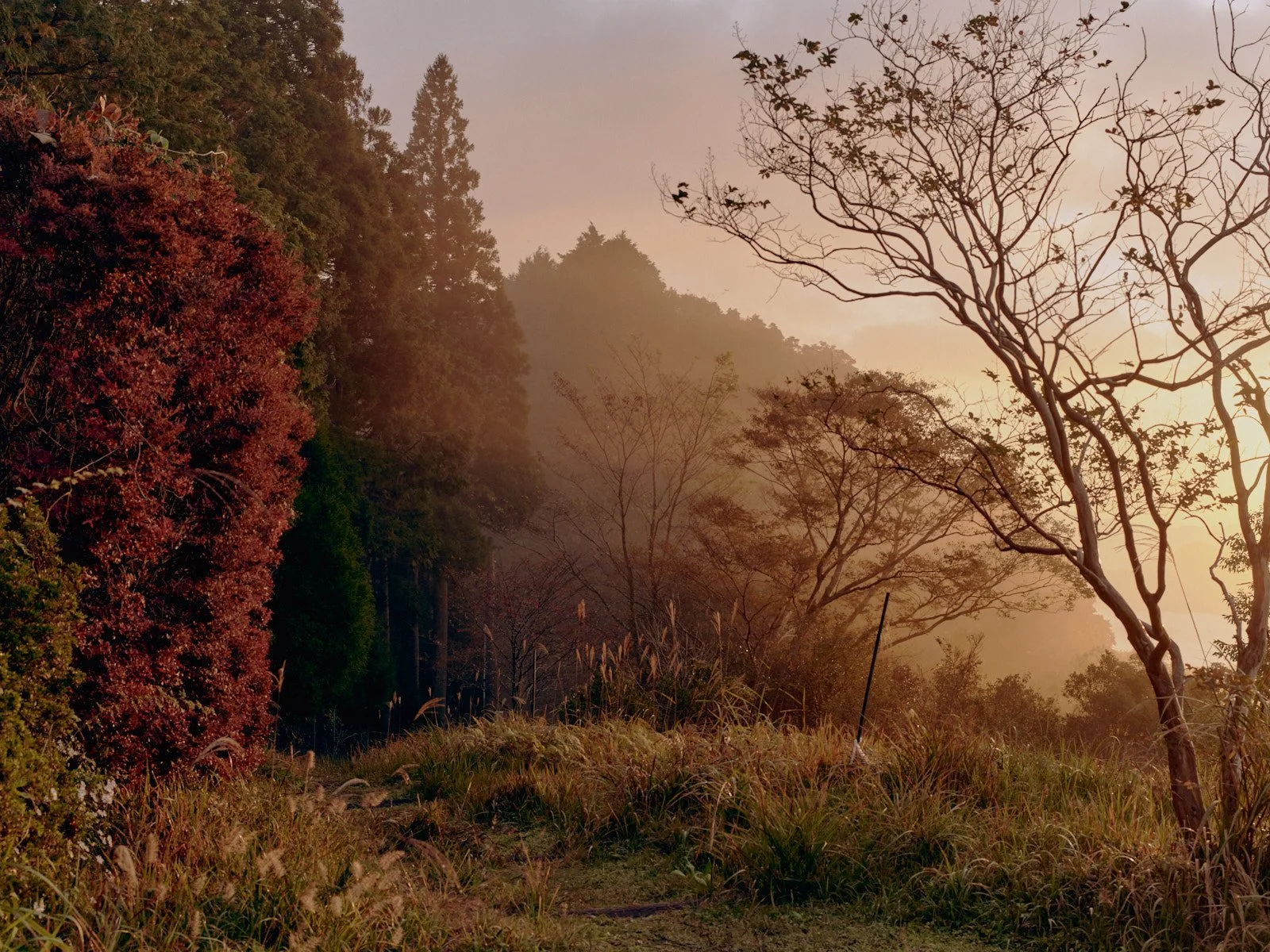
As four seasons unfold in a delicate tableaux, Shiitake immerses viewers in the natural rhythms of these forests and their inhabitants.
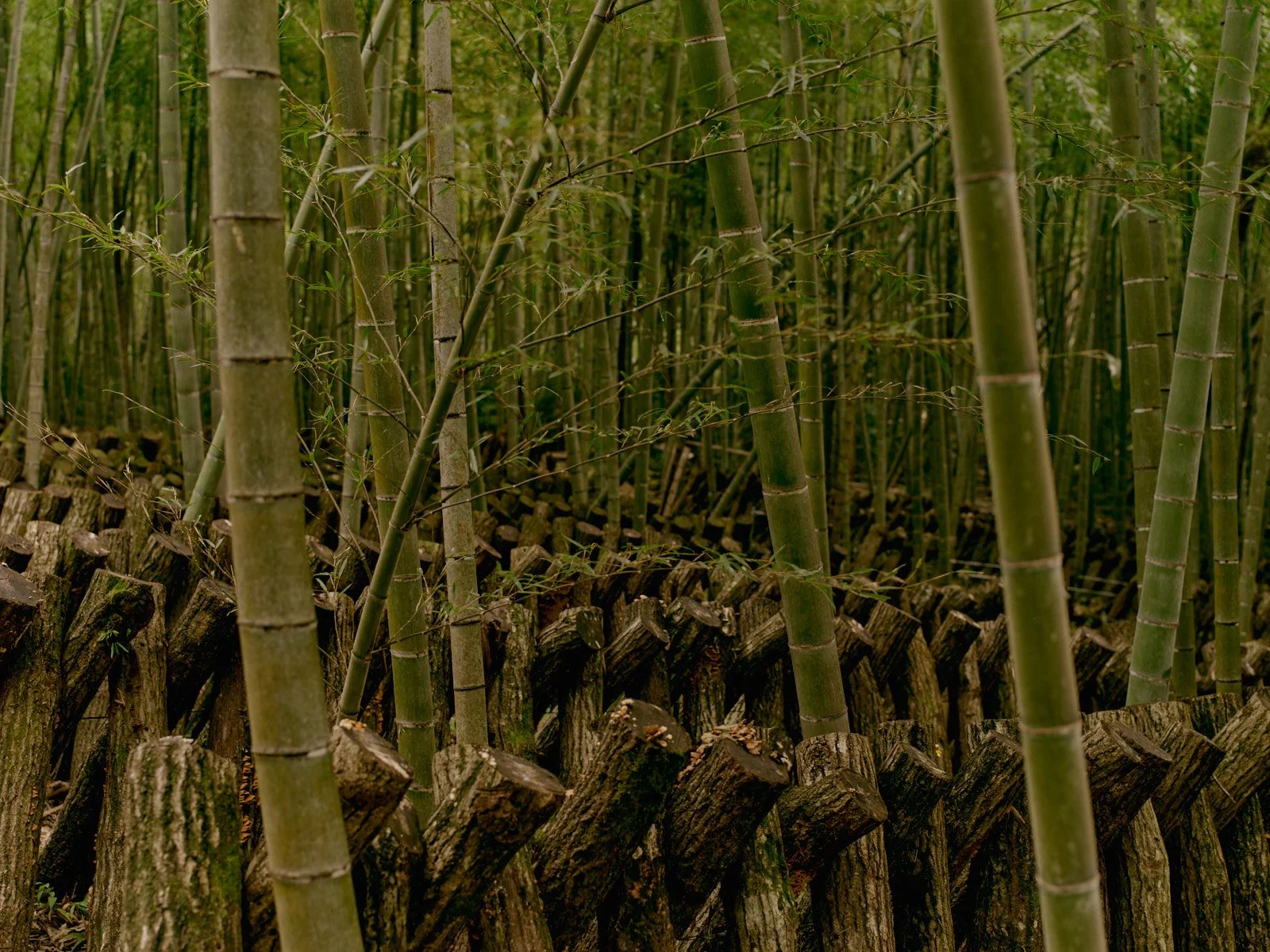
We bear witness to quiet rituals of log-grown mushroom cultivation: the careful selection of oak logs, the slow inoculation with shiitake spores, and the patient waiting as nature weaves its unseen magic.
Each act, from splitting wood to boiling rice, feels like an unspoken dialogue between human hands and the land that sustains them.
But a profound demographic and cultural shift has disrupted the balance of Japan’s mountain communities. In just two generations, millions of young people have left behind empty farmhouses and abandoned logging fields as they move to the city for higher-paying service jobs.
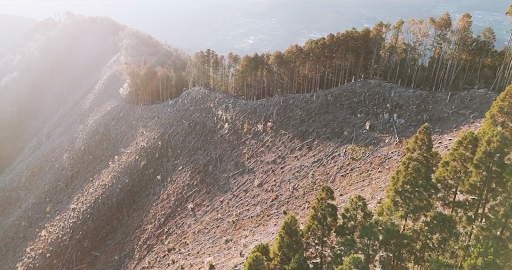
With fewer hands to tend the land, the knowledge that once sustained this way of life is eroding.
Ultimately, Shiitake is a meditation on time; highlighting moments of resilience and the fragile harmony between humans and nature, it serves as testament to the power of inter-generational knowledge.
The film doesn’t mourn the loss of tradition; it illuminates solutions that exist right under our noses, showcasing how communities can sustain natural systems.
Immersive Audio & Original Score
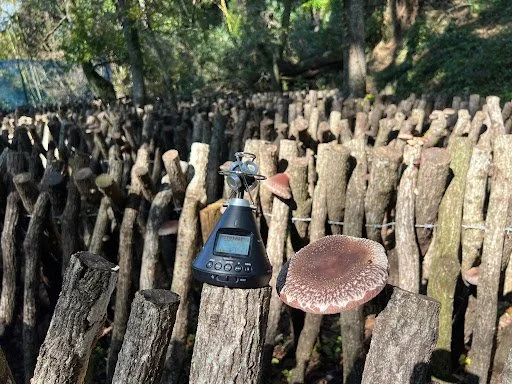
The audio landscape of Shiitake is captured and designed with the intention of not just putting our audience in the forest with our farmers, but on the log with our mushrooms.
Immersive audio is treated as equal to the visual components of our work. Using modern tools like ambisonic microphones to record the forest soundscape in 360 degrees, geophonic (earth-based) microphones that capture sounds of fungi as they decompose logs, and contact mics that surface the microscopic elements of our film, we create a layered audio experience that pull audiences into the landscape.
Beyond the sound design, Shiitake features an original score by award-winning composer and director Lewis Rapkin that was conceived on location in a cabin at the foot of the active volcano, Mount Aso.
A Kingdom of Stories
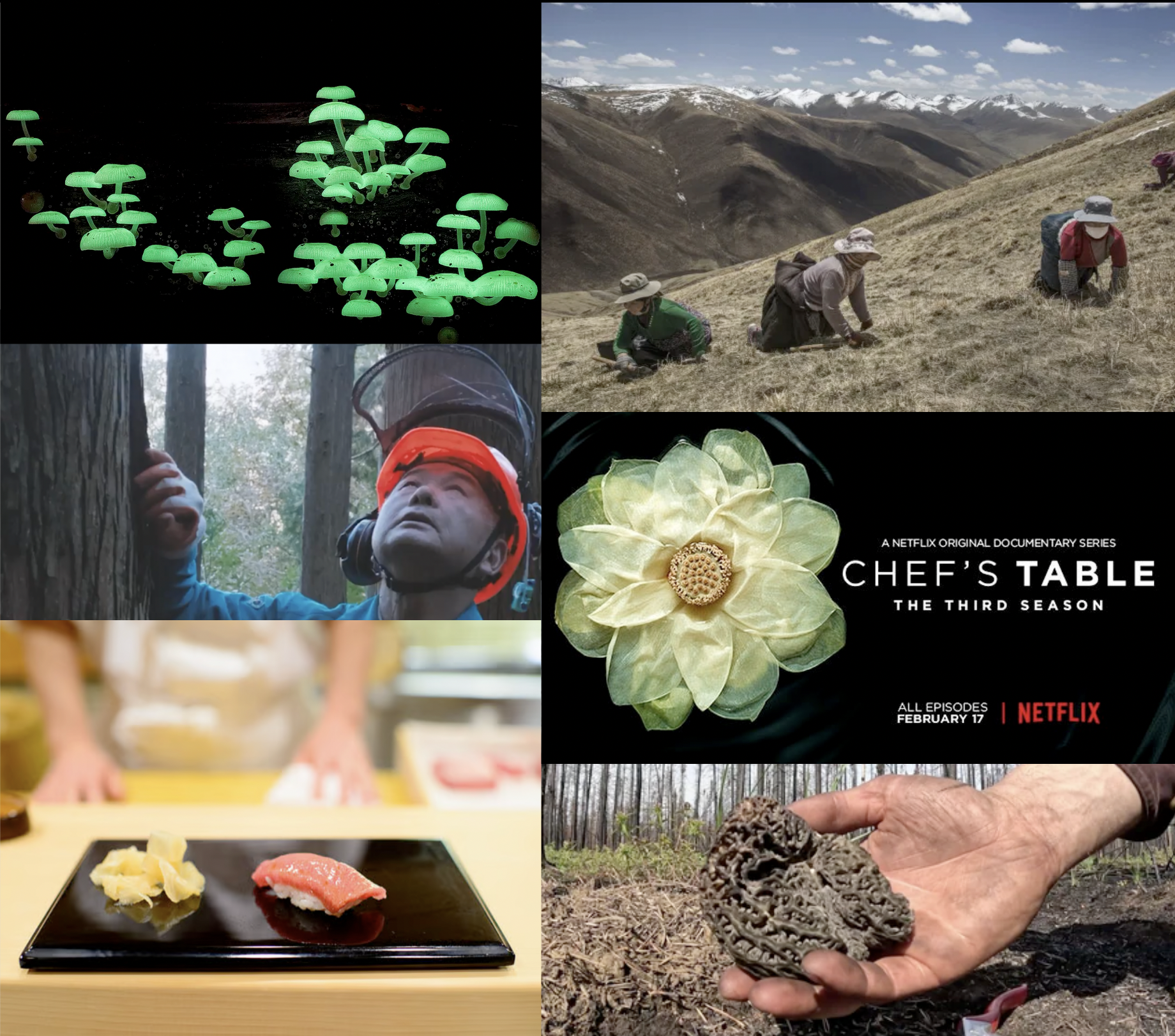
Shiitake may offer us a window into fading mountain culture in Japan, but Fungi is a Kingdom filled with mysterious and dramatic stories… if you know where to find them.
As mycologists and farmers, we have unique access to these stories from communities around the world that revolve around mushrooms. If we apply the Jiro/Chef’s Table methodology to the world of fungi, we can see a path to a recurring series that documents human-centered stories such as:
Families harvesting ultra-rare cordyceps in the Tibetan Plateau
Communities that ritually incorporate mythological psychedelic porcini into dishes in Yunan province
Conservation mycologists braving Amazonian riverways in search of plastic-eating fungi
Morel foragers heli-dropping into the Yukon Territory, armed only with duffel bags and some bear spray
about us
What should we know about the services you provide? Better descriptions result in more sales.